
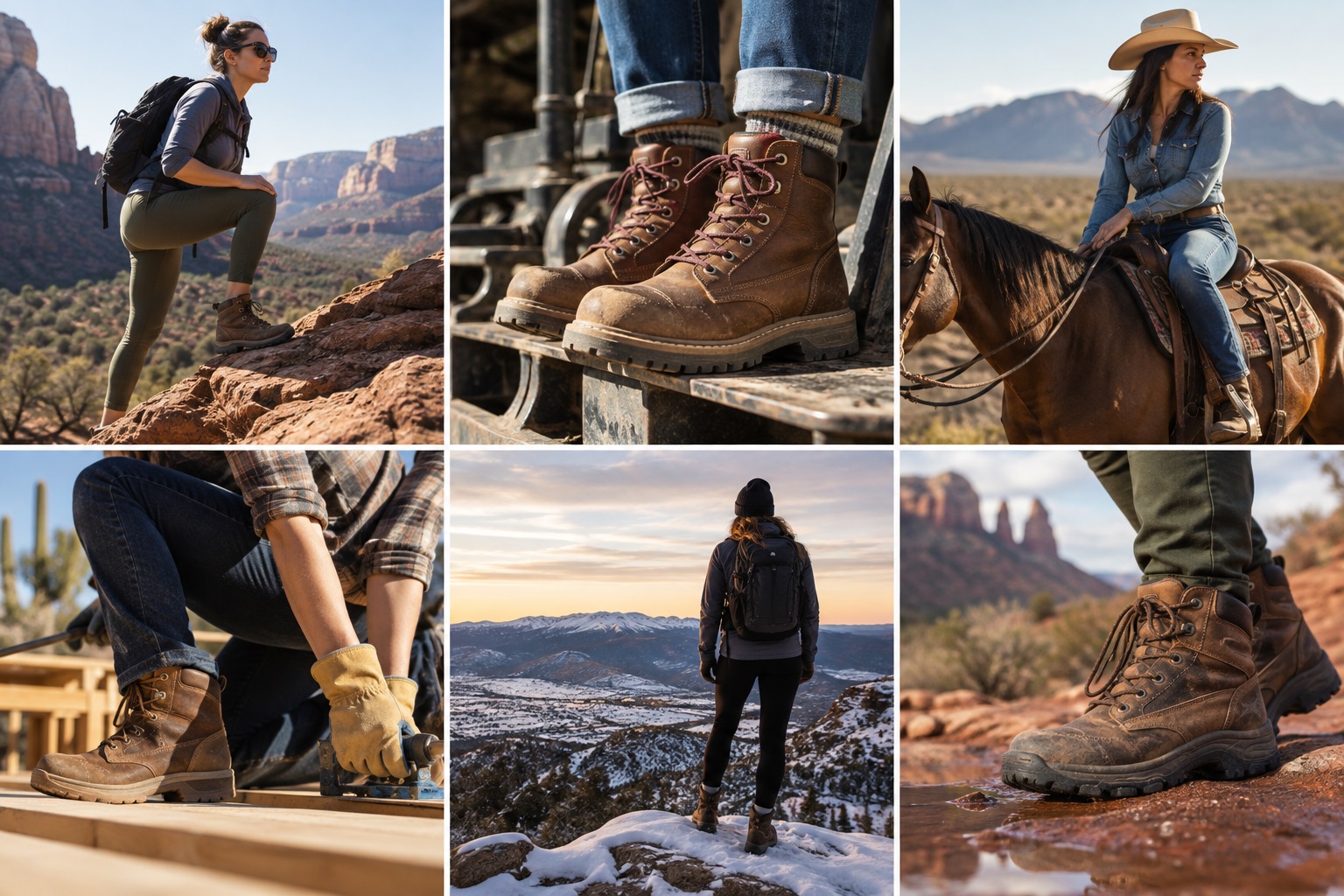
Arizona has a way of exposing weak footwear fast. A boot that seems perfectly respectable on a store shelf can become a blister-making regret after a long day on rocky ground, dusty trails, uneven ranch property, or a job site baking beneath the afternoon sun. Women who spend serious time outside here need footwear built for the conditions, not scaled-down versions of boots originally designed around men. From Flagstaff winters to Sonoran Desert heat, Arizona asks a lot from a pair of boots. Quality construction, proper support, protective features, and materials that can survive hard use are worth paying attention to.
Built for Arizona Women
Arizona women aren't confined to one version of outdoor life. They hike, work construction, manage properties, ride horses, camp, garden, tackle home projects, and spend weekends exploring terrain that would chew through a flimsy pair of shoes. For women who refuse to sit on the sidelines, the future female feels especially fitting in a state where outdoor recreation and hands-on work are simply part of everyday life.
The right boots should acknowledge how women actually move through these environments. Fit matters, particularly through the heel, arch, and forefoot. A poorly fitted boot can create rubbing, instability, and fatigue that becomes increasingly annoying as the hours pass. Arizona's rocky surfaces make secure footing even more important. Women shopping for outdoor boots should pay attention to supportive construction, durable outsoles, dependable traction, and enough room to wear appropriate socks without squeezing the foot.
Protection Can Still Look Good
Work boots once offered women a pretty bleak choice between practical and attractive. Thankfully, manufacturers have started recognizing that protective footwear doesn't have to resemble a cinder block attached to a shoelace. Women can find boots that provide serious protection while still looking polished enough to wear beyond a work environment.
Consider women's safety toe boots made from beautiful leather with impeccable craftsmanship when work or projects require additional foot protection. A well-made leather boot develops character with wear and can handle the visual punishment that comes with dust, dirt, scuffs, and repeated outdoor use. Safety toes can also provide protection in environments where heavy materials, equipment, tools, or other objects could land on the foot.
Look beyond appearances, though. Check whether a boot's protective features meet the requirements of the work being performed. A stylish safety toe isn't much help if it doesn't provide the appropriate protection for the job. Quality stitching, secure hardware, sturdy soles, and thoughtful interior construction also help separate a dependable boot from one that's merely dressed for the part.
Arizona Terrain Demands Traction
Arizona scenery can fool visitors into thinking desert terrain is mostly flat sand. Locals know better. Loose gravel, sharp rocks, slick stone, steep grades, dry washes, and sudden elevation changes can turn an ordinary outing into a serious test for footwear. Northern Arizona adds snow, ice, mud, and freezing temperatures to the equation.
Traction deserves close attention when choosing boots for hiking, outdoor work, or property maintenance. Deep, thoughtfully arranged lugs can help maintain grip on loose surfaces, while a stable sole helps the foot feel planted on uneven ground. Ankle support may also be useful for women who regularly cover rocky terrain or carry equipment.
Sole construction matters just as much as the upper. Cheap soles can wear surprisingly fast on abrasive Arizona ground. Once the tread disappears, an otherwise decent boot loses much of its usefulness. Spending more upfront on durable footwear can make financial sense when the alternative is replacing worn-out boots every season.
Weather Is More Complicated Here
Arizona's reputation for relentless sunshine tells only part of the story. Summer temperatures can be punishing in Phoenix and Tucson, while Flagstaff can look like an entirely different state during winter. Monsoon season introduces water, mud, and sudden storms, and higher elevations bring dramatic temperature swings.
Breathability becomes important for warm-weather wear, particularly during long days outside. Leather quality, lining materials, sock choice, and boot construction can all influence comfort. Waterproofing is useful for wet conditions, but women who primarily work in intense heat may prefer designs that emphasize ventilation unless regular water exposure makes waterproof construction necessary.
Boot care matters here, too. Dust and dry conditions can be hard on leather over time. Cleaning off accumulated dirt and conditioning leather according to the manufacturer's recommendations can help preserve flexibility and appearance. Boots used around monsoon mud should be allowed to dry properly rather than being abandoned damp in a garage until the next adventure.
Better Boots Earn Their Keep
A high-quality boot isn't automatically the most expensive one in the store. The better measure is whether its construction matches the woman's actual routine. Someone maintaining acreage outside Prescott has different footwear needs than someone hiking around Sedona on weekends, just as a Phoenix tradeswoman may prioritize different features than a camper spending winter weekends near the Mogollon Rim.
Start with fit, then consider traction, materials, protection, climate, and expected mileage. Don't buy an unnecessarily heavy boot simply because it looks rugged. Likewise, don't choose a fashion-first design for demanding outdoor use and expect it to perform like purpose-built footwear.
Arizona gives outdoorsy women plenty of reasons to own genuinely good boots. The terrain is rough, the weather changes dramatically across the state, and outdoor life rarely stays clean for long. Buy boots that fit properly, suit the job, and can take some punishment. Your feet will know the difference.
