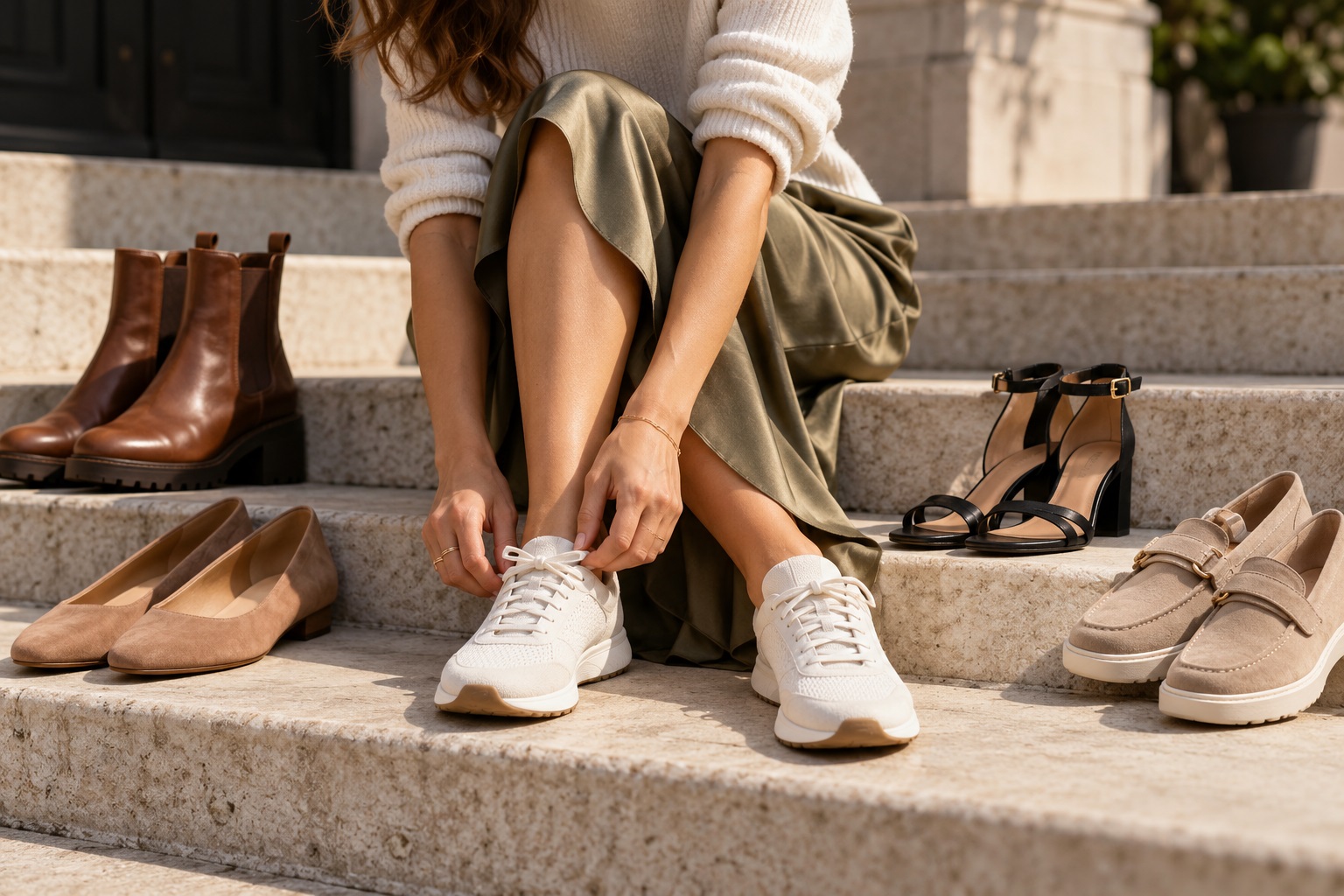
A beautiful shoe that becomes unbearable by lunchtime has limited value, no matter how good it looked with the outfit at 8 a.m. Fortunately, comfort and style are no longer occupying opposite ends of the closet. Some of the most useful shoes for women prioritize natural movement, adequate room for the toes, stability and an appropriate fit while still working with the clothes women actually want to wear. Rather than relying on a single "comfortable" pair for every occasion, a foot-friendly wardrobe should offer several options for different activities, seasons and stages of life.
The Barefoot-Inspired Shoe
Minimal footwear has earned a place beyond the gym and hiking trail. Barefoot shoes for women typically emphasize a wider toe box, thin and flexible soles and little or no difference in height between the heel and forefoot. The design gives toes more room to spread and allows the foot to move differently than it does inside a rigid or heavily structured shoe.
The aesthetic has also become considerably more sophisticated. Depending on the design, barefoot-inspired footwear can take the form of sneakers, flats, boots and casual slip-ons, making it easier to experiment without sacrificing an entire wardrobe to the cause. Anyone accustomed to highly cushioned or supportive footwear should transition gradually rather than immediately wearing minimal shoes all day. Think of them as an intriguing addition to the shoe rotation, not a mandate to discard everything else.
The Supportive Walking Sneaker
Every closet needs a shoe capable of handling the days that accidentally turn into 15,000-step affairs. A good walking sneaker should fit the actual shape and size of the foot, feel secure at the heel and provide enough room in front for the toes to move without rubbing against the upper.
Cushioning preferences are personal, so more is not automatically better. The right sneaker should feel stable and comfortable during the activities for which it will be worn. Someone walking city sidewalks may want a different combination of cushioning and flexibility than someone who primarily wears sneakers for errands or commuting.
Fit deserves particular attention because shoe size is not perfectly consistent across brands or even styles. Trying footwear on later in the day, when feet may be slightly larger, can provide a more realistic idea of how a pair will feel after several hours of wear. There should be no assumption that an uncomfortable sneaker simply needs to be "broken in."
The Adjustable Everyday Shoe
Feet do not necessarily maintain exactly the same dimensions throughout the day or across different stages of life. An adjustable shoe can accommodate some of those changes without forcing the foot into a rigid shape. Laces, straps and other adjustable closures allow the wearer to modify the fit rather than relying entirely on a fixed upper.
That flexibility is one reason adjustable, stable footwear is often considered among the best shoes for pregnancy. Feet can become larger or swollen during pregnancy, making formerly reliable shoes less comfortable. A roomy toe area, secure sole and adjustable fit can accommodate changing needs while reducing the temptation to squeeze into a favorite pair that no longer fits properly.
This category does not have to mean athletic footwear. Adjustable sandals, sleek sneakers and certain flats can deliver the same practical advantage. The goal is a shoe that remains secure without constricting the foot, particularly during long periods of standing or walking.
The Low, Stable Heel
Giving up towering stilettos does not require giving up heels altogether. For occasions that call for elevation, a lower, broader heel generally provides a more stable platform than an extremely high, narrow one. The difference can be significant during weddings, work events or evenings that involve more standing than expected.
Toe shape deserves equal consideration. A pointed silhouette can be elegant, but the interior of the shoe still needs enough room to avoid excessively crowding the toes. Some designs achieve a pointed appearance by extending the shoe beyond the toes rather than narrowing the usable interior dramatically.
A block heel, kitten heel or low wedge can provide the polished effect of elevated footwear while being considerably easier to navigate. Keeping a pair in a neutral shade also reduces the need to own multiple uncomfortable special-occasion shoes that receive only occasional wear.
The Structured Everyday Boot
Boots earn their closet space because they combine coverage, versatility and practicality across several seasons. The healthiest option is not necessarily the softest one. A well-fitting everyday boot should hold the heel securely, provide adequate space through the forefoot and allow comfortable walking without forcing the ankle or toes into an awkward position.
Sole design should reflect how the boot will actually be used. Someone navigating wet sidewalks needs reliable traction, while a commuter who walks extensively may prioritize flexibility and cushioning. Heel height matters as well, particularly if the boots will routinely be worn for full days rather than short evenings.
The best foot-friendly wardrobe is ultimately a rotation, not a single supposedly perfect shoe. Giving feet appropriate space, choosing footwear for the activity and refusing to normalize pain leaves plenty of room for fashion. Comfort is simply one more standard a great pair of shoes should be expected to meet.
