


As affordable housing grows scarcer and the cost of living climbs, three Phoenix-area families show how life events can push an ordinary household into homelessness—and how the chance to call a house a home can change everything.
Original photography courtesy Scott Foust Studios
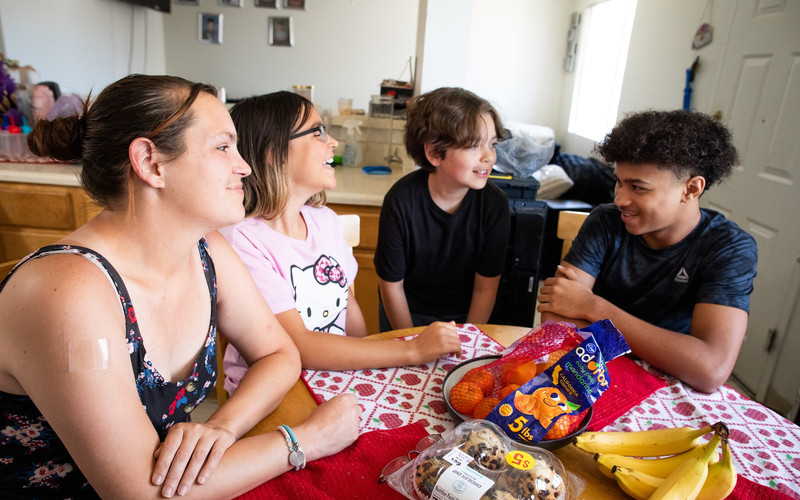
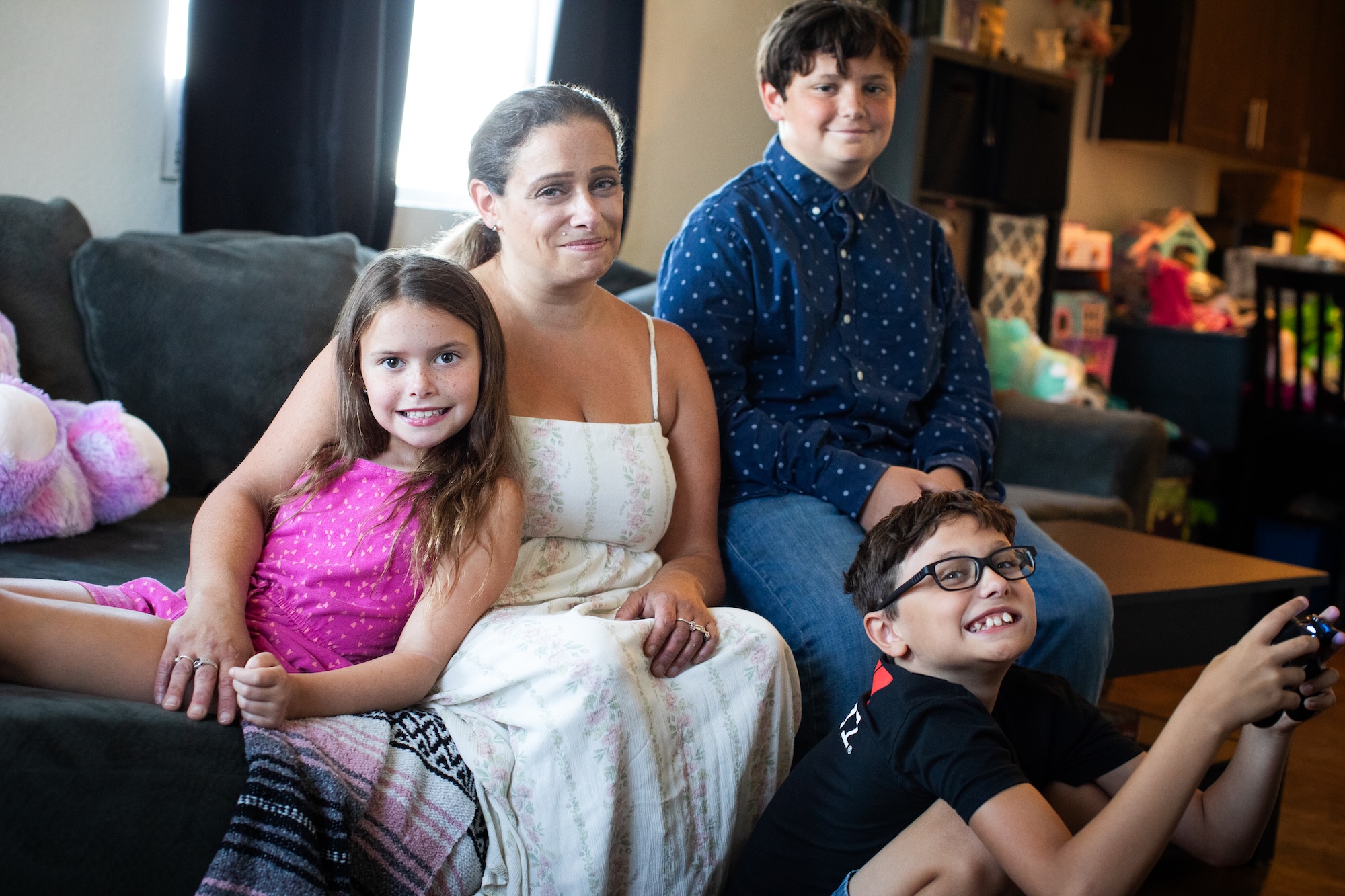
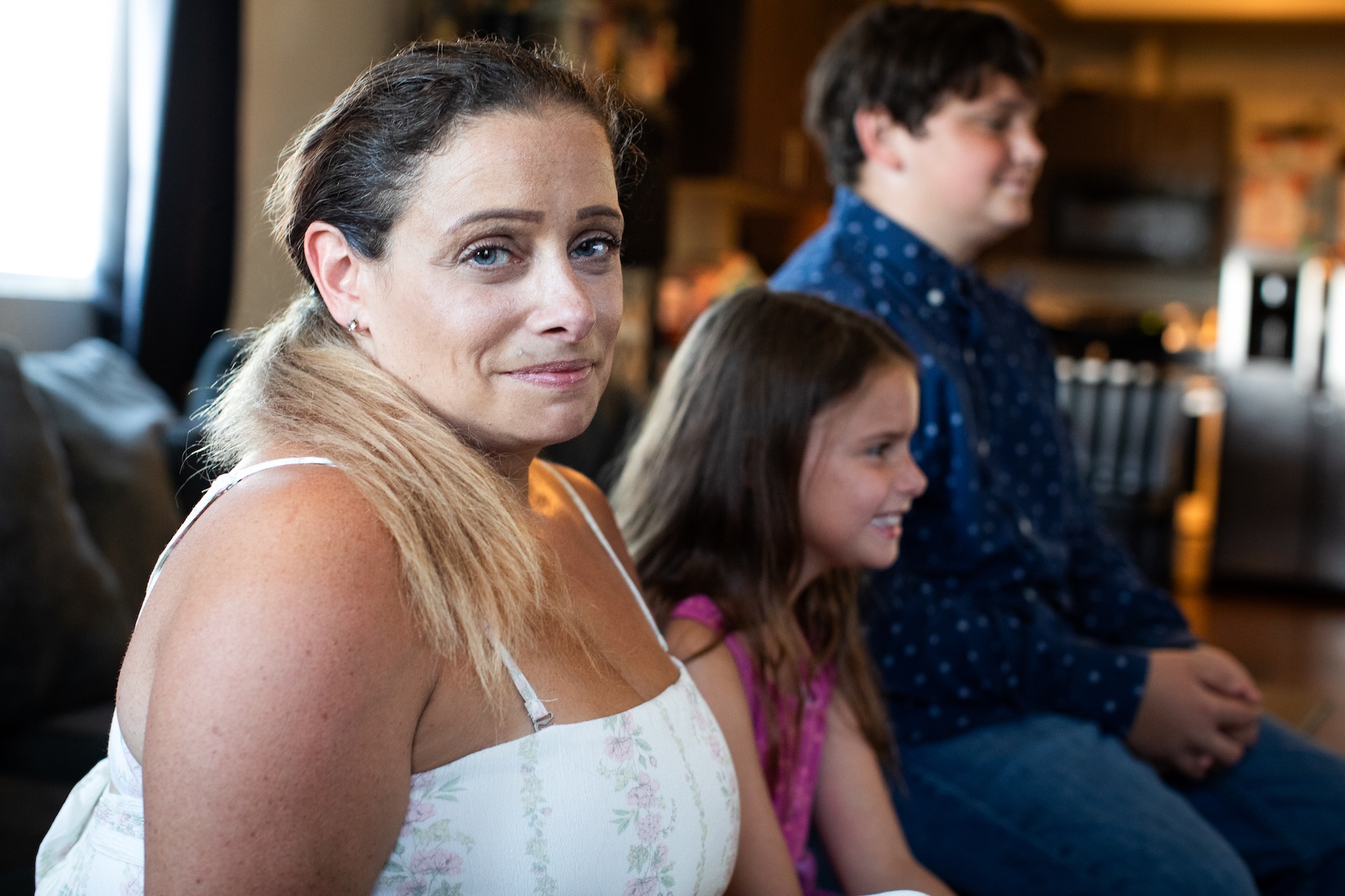
The life Ashley P. wanted was modest by most measures: a kitchen table stacked with fresh fruit, framed portraits of her three children on the wall, the morning drive to school and her two boys heading to the local basketball court. After everything her family had endured, these ordinary details were the whole point.
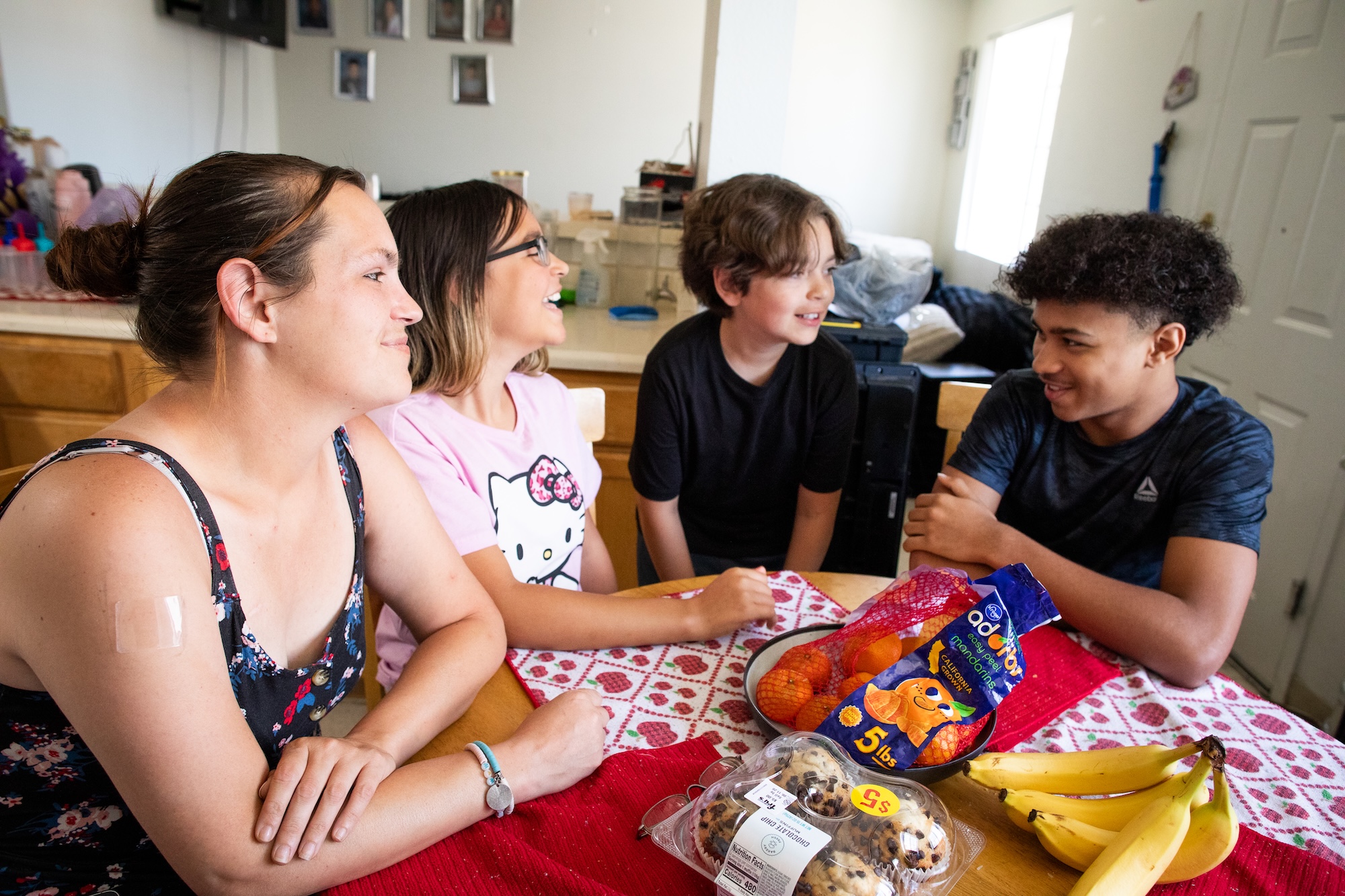
Not long before, Ashley had been making a different calculation: how to move her children out of their home in 30 days while undergoing treatment for stage 4 colorectal cancer and unable to work.
Ashley, 36, had raised her children in North Carolina and kept up with the bills. Housing insecurity was unfamiliar.
“My bills were always paid,” she said. “My rent was always paid. Everything was fine.”
Then she came to Arizona to escape a dangerous domestic violence situation and protect her children, Jaidon, 13, Nalyha, 12, and Leland, 10. As she began rebuilding, she received the cancer diagnosis. She went on medical leave while on chemotherapy and radiation, but could not return to her job. Without an income, the structure of her life gave way quickly.
“I lost my home, my job, everything I worked hard for,” she said.
She and her children were given 30 days to leave their home, and for the first time, Ashley faced the possibility that they would have nowhere to go.
“I felt like I was a failure at that time,” she said.
What Ashley understood as a personal failure had grown out of two crises arriving almost at once: violence and serious illness. The distance between stability and homelessness had turned out to be much smaller than she had ever imagined.
In greater Phoenix, that distance is increasingly measured in dollars. According to the National Low Income Housing Coalition, Arizona is short 130,552 rental homes affordable and available to extremely low-income households. In the Phoenix-Mesa-Chandler metropolitan area, a worker must earn $35.37 an hour to afford a two-bedroom rental at the federal fair market rent. At minimum wage, a worker would need to put in 87 hours a week—the equivalent of 2.2 full-time jobs—to afford a two-bedroom rental statewide.
Under those conditions, a medical diagnosis can easily become a housing crisis. So can a job loss, a family separation or a fixed disability check that no longer covers the bills. Homelessness may become visible on a sidewalk, but it often begins privately, with a household budget that no longer balances.
Across the Valley, that process can remain largely out of sight. It unfolds inside homes families have been told to leave, in cars and motel rooms, in spare bedrooms where relatives double up, and in the separation of people who can no longer afford to live together.
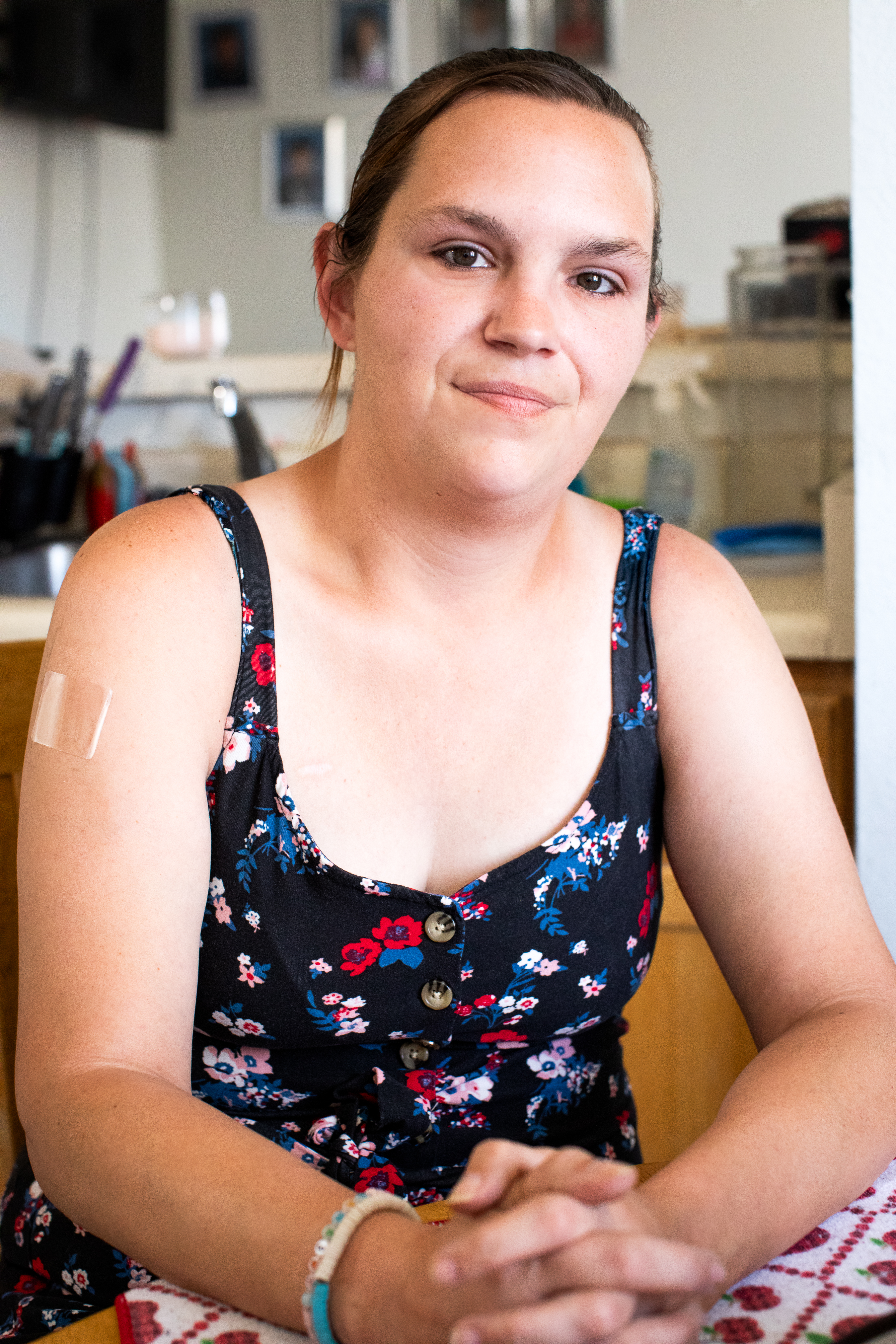
Ashley eventually connected with A New Leaf, a Maricopa County nonprofit that provides housing, shelter and support services to people in crisis. She moved with her children into one of the organization’s affordable housing communities. She is now in remission.
The apartment came with practical support, including an on-site marketplace and help with everyday needs. But it also returned something less tangible: a place where the family could settle into a routine without wondering how long it would last.
“I love it,” she said of the apartment. “The support system is amazing.”
A New Leaf serves nearly 20,000 clients annually through coordinated entry or referrals from hospitals, schools, law enforcement and social services, while some seek help directly.
“Across all programs, our goal is to provide not just housing, but the supportive services needed to help people build lasting independence and stability,” said Brandon E. Dale, CEO of A New Leaf.
Dale said one of the most persistent misconceptions is that homelessness affects a particular kind of person.
“One of the biggest misconceptions about homelessness is that it only affects a certain type of person,” Dale said. “Every day, we meet working parents, seniors, veterans and survivors of domestic violence who simply experienced a crisis they couldn’t overcome alone.”
Kira F. arrived at housing insecurity by a different route. For her, an apartment became one of the final requirements in a long effort to bring her children home.
Several years ago, Kira’s drug addiction led child protective services to remove her three young children from her custody. Kira was homeless and alone. Not having her kids, she said, became the turning point.
“I just wanted my kids back so desperately,” she said. “Losing them was devastating, and right then I decided to change.”
Over the next two years, Kira attended every court hearing, went through drug counseling and participated in therapy with her children. Recovery was necessary but not sufficient. She also needed to be able to afford an address to provide a safe home for her children to return to.
Then she learned that A New Leaf could help her secure a two-bedroom apartment.
“When I heard that, the weight of the world just lifted off of my shoulders,” Kira said. “I knew the court expected me to have a proper home for my kids, and this would make that possible.”
Her family came home in stages. Her oldest son, Arik, 13, returned first. A few months later her younger son, Shaun, 10, followed. Finally, her daughter, Chastity, 7, was placed back in her custody. The full effort took four years.
The apartment did not replace the work Kira had done. It gave that work a place to hold and grow.
Today, Kira is pursuing a master’s degree. Her children are doing well in school and attend A New Leaf’s after-school program. She talks about wanting to be present and consistent, to give them the kind of daily assurance they once lacked.
“I feel proud of where I am now,” she said. “I finally have the life I want, and I get to share it with my children.”
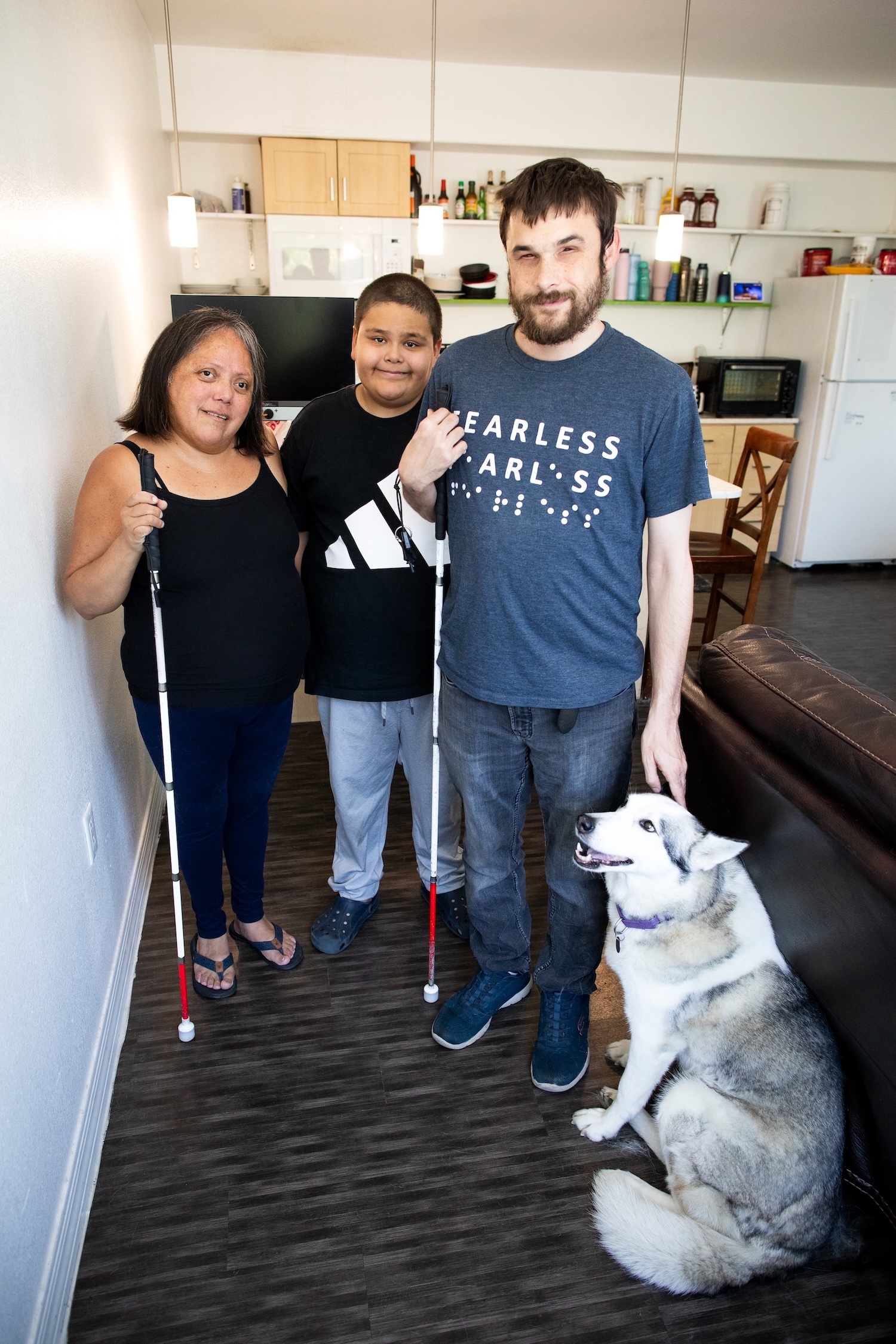
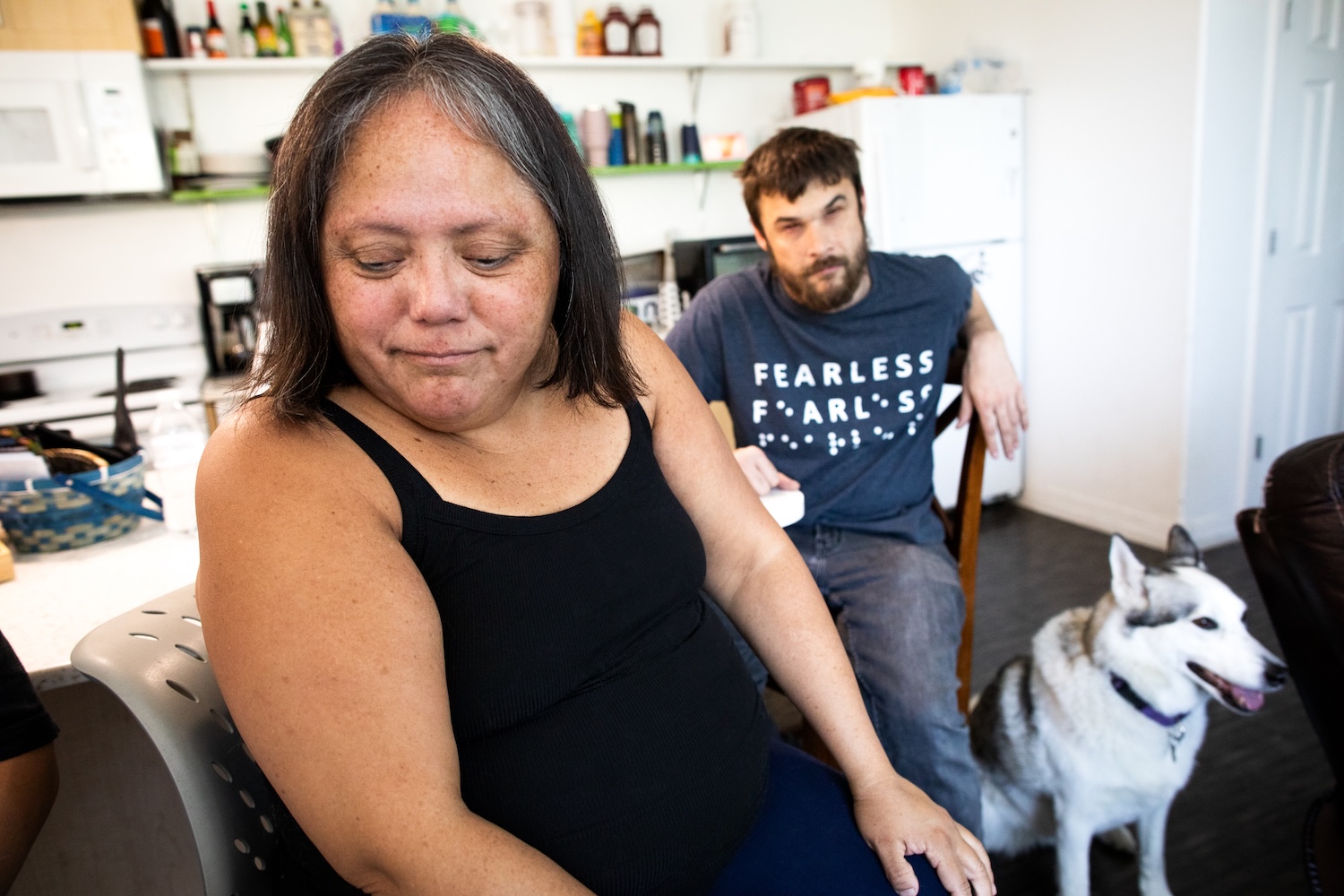
For Tim, 33, and Antoinette, 43, the arithmetic of housing insecurity centered on a fixed income. Both are legally blind. They were raising their son, Elliot, largely on disability income when they could no longer keep up with the bills. Antoinette and Elliot moved in with relatives while Tim searched for work and an apartment. He eventually became homeless and lived in a tent.
They still considered themselves a family; they simply could not afford to share a home.
“I was scared as a new father, having a baby boy and trying to make ends meet,” Tim said. “It was a challenging time for us.”
As the weeks became months, a relative helped Tim call a housing hotline. That call connected the family with A New Leaf. Within days, they moved into a unit where their rent was indexed to their income. The calculation that had divided the family finally changed.
“When we signed the lease and they handed us the keys, it was like our dream of having a stable home was finally coming true,” Tim said. “We’d been looking for our forever home for so long.”
Elliot, now 11, enrolled in a nearby school and attends the on-site after-school program. Tim found work at the Foundation for Blind Children. A job, a school and an address allowed the family to enjoy the same daily life together again.
The stories of Ashley, Kira, Tim and Antoinette are just a snapshot of a much larger issue.
The current 2026 Point-in-Time (PIT) Count identified 9,726 people experiencing homelessness in Maricopa County. Among them were 611 families comprising 2,103 people.
The name is bureaucratic, but the count carries weight. Each January, local homelessness-response networks known as Continuums of Care conduct the federally required count of sheltered and unsheltered homelessness on one night. The results go to the U.S. Department of Housing and Urban Development and influence planning and funding.
The Maricopa report is the official annual recording for the Phoenix region, not a statewide count. Pima County counts separately, while the Arizona Balance of State Continuum of Care covers the other 13 counties. Together, they form Arizona’s standardized PIT picture.
The report acknowledges that a single night cannot capture movement in and out of homelessness over a year. Indeed, the National Homelessness Law Center has noted that estimates could actually be 2.5 to 10.2 times higher, illustrating the limitations of one-night counts.
Ruby Dhillon-Williams, director of the Arizona Department of Housing, said more than half of Arizona’s low-income renters spend more than half their earnings on housing. The state has invested in homelessness response, affordable rentals and homeownership, she said, but the shortage requires a response that lasts beyond a year-by-year budget.
“The single greatest hurdle is shifting from reactive, one-time emergency infusions to sustainable, permanent funding streams that keep pace with Arizona’s housing deficit,” she said, noting that the state invested $165 million and broke ground on more affordable housing units over the last three years than during any other three-year period in Arizona’s history.
While those decisions can sound removed from the lives they shape, their consequences are not. For Kira, housing created the conditions for her children to come home. For Tim and Antoinette, it reunited a family under one roof. For Ashley, it restored the rhythm of getting children to school and watching them run off to play.
“Stable housing isn’t the end goal, it’s the starting point,” Dale said. “Once people have a safe place to call home, they can begin to heal, regain stability and move forward.”
At Ashley’s table, that starting point looks a great deal like ordinary family life. That is precisely what she had feared losing.
“I feel like there’s hope,” she said.
How to Help

Beyond monetary contributions, other ways include volunteering, organizing and participating in donation drives for essential household items, supporting organizations providing housing and services, and advocating for policies that expand affordable housing.
“Many people experiencing housing insecurity are working, raising children or recovering from circumstances beyond their control,” Dale said. “Treating people with dignity, learning about the realities of homelessness and supporting organizations doing this work all help build stronger, more compassionate communities where everyone has the opportunity to thrive.”
Learn more at turnanewleaf.org.
When Home Isn’t Safe
For someone experiencing domestic violence, leaving may also mean losing a home and financial stability.
Maricopa County’s 2026 PIT count found that 37% of the people identified were female, while 622 people reported experience with domestic violence. While the report does not show how much those groups overlap, the figures point to the intersecting crises survivors may face.
Hope Women’s Center, an Arizona nonprofit serving vulnerable women and teen girls, provides free counseling, mentoring, job training, parenting classes and material assistance. In 2025, the organization served 2,526 Arizona women.
Learn more at hopewomenscenter.org.
Child Homelessness
A child does not have to sleep outside to lack a stable home. Many kids stay in motels, cars or with relatives because their family cannot afford a place of its own.
This may help explain why official counts differ. Maricopa County’s 2026 PIT count identified 1,322 children on that January night. The Arizona Department of Education counts students statewide over an entire school year and includes those temporarily doubled up with other families. By that broader measure, Arizona recorded 18,040 homeless children and youth in 2021–22, its latest published count. Of the 18,025 students with a reported nighttime residence, 12,637 were doubled up. The figures cover different places, periods and definitions, so they are not directly comparable, but together they show the limits of a one-night snapshot.
Child Crisis Arizona has been helping our community’s most vulnerable children, youth and families for nearly five decades. In 2025, the organization served 23,662 individuals.
Learn more at childcrisisaz.org.